Trained community members are set to document local public meetings
Crowsnest Pass, Alta., April 24, 2026 – Documenters Canada is expanding its national network with the launch of a third site, in Crowsnest Pass, Alberta, where trained community members are starting to document public meetings. Their fact-checked notes will be made publicly available to all, contributing to more accessible and understandable local decision-making.
The project is led by the local newspaper, The Crowsnest Pass Herald, in partnership with a team at the Southern Alberta Institute of Technology (SAIT) in Calgary. Together, they developed a field guide that serves as the foundation for training and is available to anyone interested in monitoring public meetings more closely.
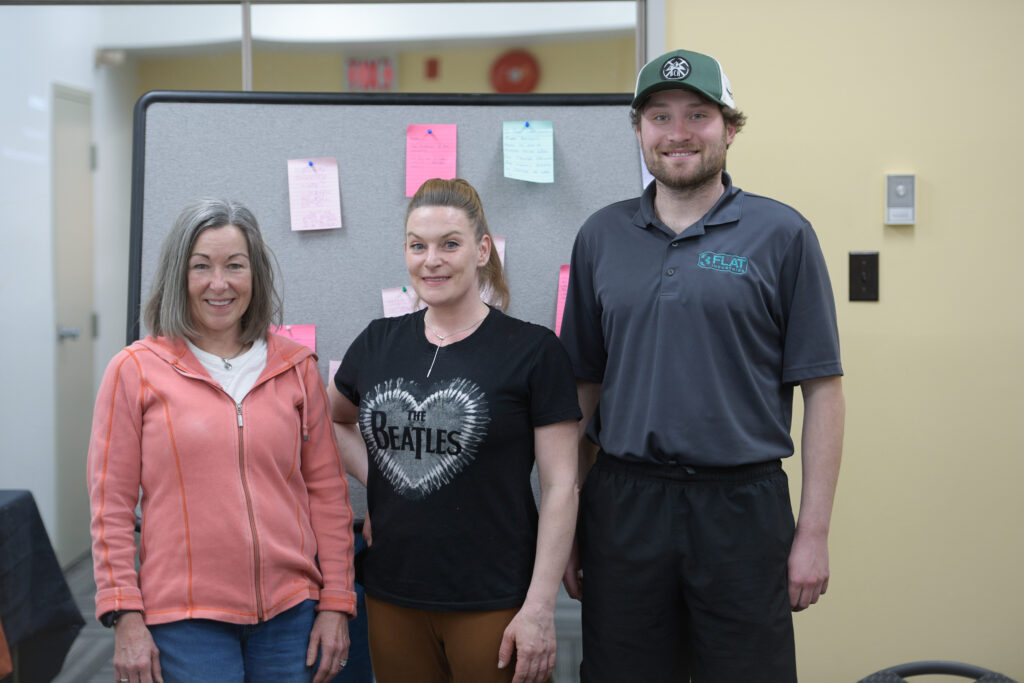
Documenting is already underway. Three community members received training on April 21 at the Crowsnest Pass Library. Trainees attended their first public meeting on April 22. They will make often complex or technical conversations easier to understand for their neighbours.
Crowsnest Pass Documenters is powered by several key partners: The project is led by Lisa Sygutek, owner and publisher of the Crowsnest Pass Herald, one of the few remaining independent newspapers in Alberta, alongside Allison Capron, who serves as the local community engagement lead, in collaboration with Tyler Nagel and Sarah B. Groot, journalism instructors at SAIT, and Elise Stolte, engagement producer at CBC Calgary.
For Lisa Sygutek, the decision to launch Documenters in the Crowsnest Pass comes from her everyday observations as a local publisher: There simply aren’t enough resources to meet needs everywhere, even as the demand for reliable, on-the-ground coverage continues to grow.
“Important conversations at public meetings can go undocumented, and that creates gaps in what the community knows about decisions that directly affect them,” she explains.
She adds that “Documenters is a practical way to close that gap by training and paying local residents to attend and document meetings, expanding coverage while giving people a direct role in the democratic process. For me, it is about strengthening transparency, supporting local journalism and making sure our community has a clear, consistent record of what is happening at the municipal governance level.”
This expansion was made possible thanks to funding from the Social Sciences and Humanities Research Council of Canada (SSHRC) and a renewed grant from the Inspirit Foundation.
Want to learn more? Have a question? Collaborate? documenters-canada@concordia.ca
About Documenters/Documentalistes Canada:
Documenters Canada’s mission is to equip people to engage in their community in new ways while also improving the amount and quality of local news and information, and working toward greater accountability of elected representatives by having people present at public meetings. We do this by training and paying community members to document public meetings in partnership with news and community organizations. Through its research stream, Documenters Canada adds to a growing body of literature that has already shown that notes produced by Documenters are often easier to access than official minutes and can help foster greater civic participation. Learn more about us at documenterscanada.ca.
About the Crowsnest Pass Herald:
The Crowsnest Pass Herald is a locally owned, community newspaper serving the Crowsnest Pass and surrounding region, including parts of southwestern Alberta and the Elk Valley in British Columbia. Published weekly, the Herald provides consistent, on-the-ground coverage of municipal government, regional issues, local business, community events and public interest stories. With a distribution of approximately 1,500 households each week, the Herald is committed to accessible, reliable local journalism that reflects the voices and experiences of the communities it serves. The publication has expanded its coverage in recent years to include cross-border regional reporting, recognizing the interconnected nature of communities in southern Alberta and southeastern British Columbia. Through initiatives such as the Documenters program, the Herald continues to strengthen civic engagement by supporting public participation in local decision-making and increasing transparency in municipal governance.