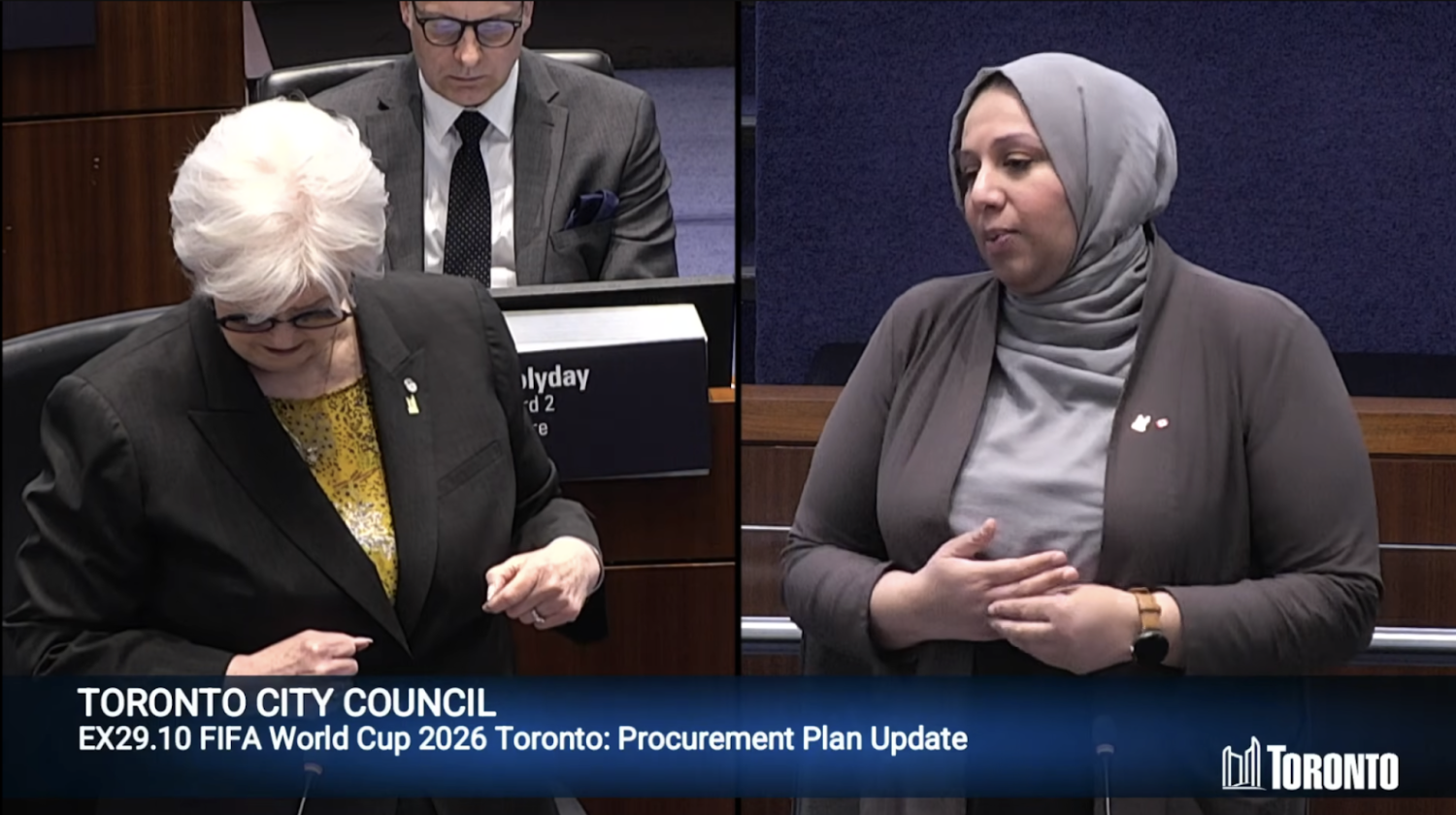
On Mar. 26, 2026 Toronto’s City Council met at City Hall to discuss updates to the City’s procurement plan related to the 2026 FIFA World Cup.
On Mar. 26, 2026 Toronto’s City Council met at City Hall to discuss updates to the City’s procurement plan related to the 2026 FIFA World Cup.
As Toronto prepares to host several matches, councillors and staff are working to ensure procurement processes generate meaningful community benefits, including local hiring and opportunities for equity-deserving groups.
The conversation focused on refining the language of the procurement plan to reflect current developments, as well as how procurement data is collected, reported and shared with the City by FIFA. Councillors also raised concerns about how local communities can access opportunities tied to the tournament.
Deputy Mayor Ausma Malik introduced amendments to strengthen the language in the procurement plan and clarify reporting expectations.
The changes include replacing the term “procurement work” with “procurement activities, and local hiring outcomes, including specifically a focus on equity-deserving communities,” removing the phrase “the local procurement” and replacing it with “this local procurement,” and adding “community benefits and” after the words “reporting on.”
These updates are intended to improve how the City tracks the impact of FIFA-related procurement, particularly in understanding how benefits are distributed across communities.
Coun. Michael Thompson raised concerns about how residents and community members will learn about and access procurement opportunities tied to the World Cup.
“How do members of the broader community, how do they actually participate as part of the local community benefits and procurement process?” Thompson asked.
Coun. Malik responded that the City has been working with local organizations, including the Toronto Community Benefits Network, to connect opportunities with communities. She also pointed to a youth employment forum focused on jobs emerging and those already in play from the FIFA World Cup.
City staff noted that FIFA operates under its own procurement requirements and contracts and that the City is working to ensure those processes align with local community benefit goals.
Thompson also suggested that procurement information be shared at the ward level so councillors can directly distribute opportunities to residents.
“I just wanted to make sure we inform the public that the ability is there if they are not, for example, connected with the Community Benefit Network and other entities,” he said.
Coun. Carol J. also emphasized the importance of receiving detailed procurement data from FIFA, including clear definitions of what qualifies as “local procurement.”
Key takeaways
- The City is strengthening procurement language to better capture community benefits and equity-focused hiring outcomes.
- Councillors are seeking more detailed data from FIFA on procurement activities.
- Community access to procurement opportunities remains a key concern.
- The City is working with local organizations to connect residents to FIFA-related jobs and contracts.
- Councillors may play a larger role in distributing information to their communities
On-the-ground observations from our documenter, Emma Amodio
During the meeting, much of the discussion centered on transparency – not just in how procurement decisions are made, but in how their impacts are measured and communicated.
What stood out was the concern among councillors about whether procurement information will actually reach the communities it is intended to benefit. While the amendments strengthen reporting language, access to that information remains uncertain.
There was also a noticeable tension between FIFA’s control over procurement processes and the City’s desire to ensure local economic and social benefits. Aligning an international organization’s systems with local priorities continues to present challenges.
CHECK YOUR FACTS
Documenters:

Meeting notes done and documented by Emma Amodio