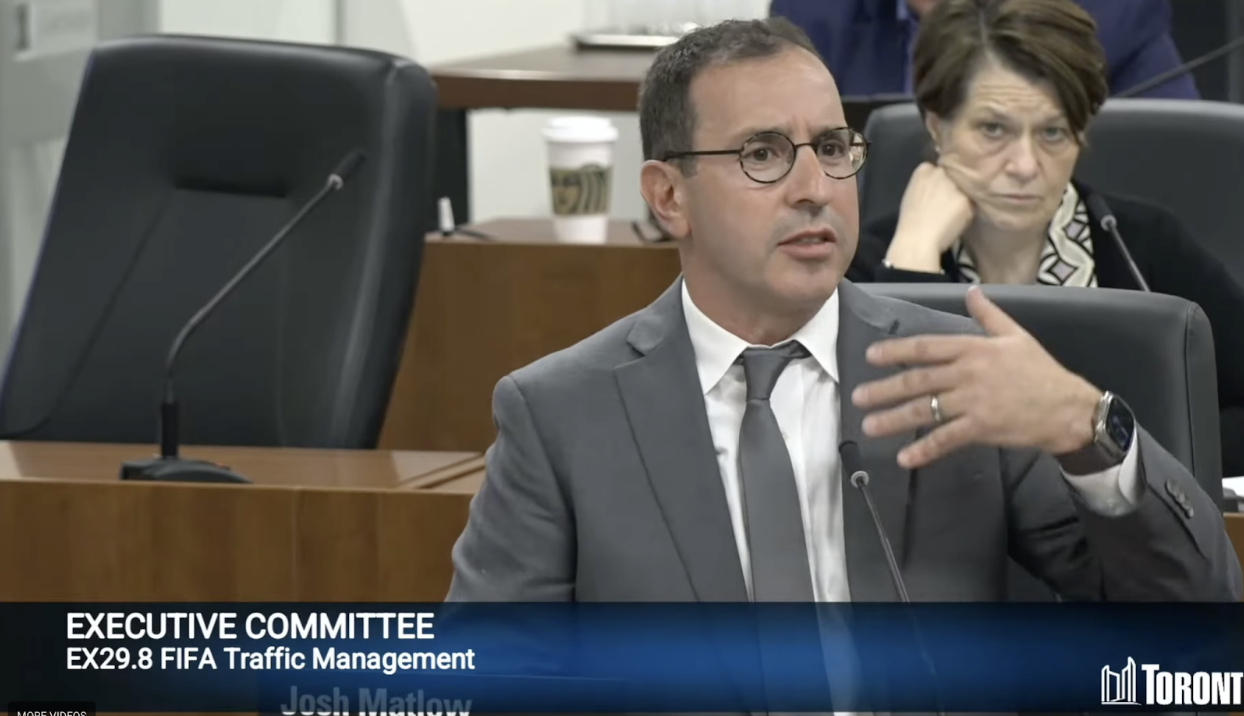
On March 10, 2026, the Executive Committee held a meeting to discuss traffic management for the upcoming soccer tournament.
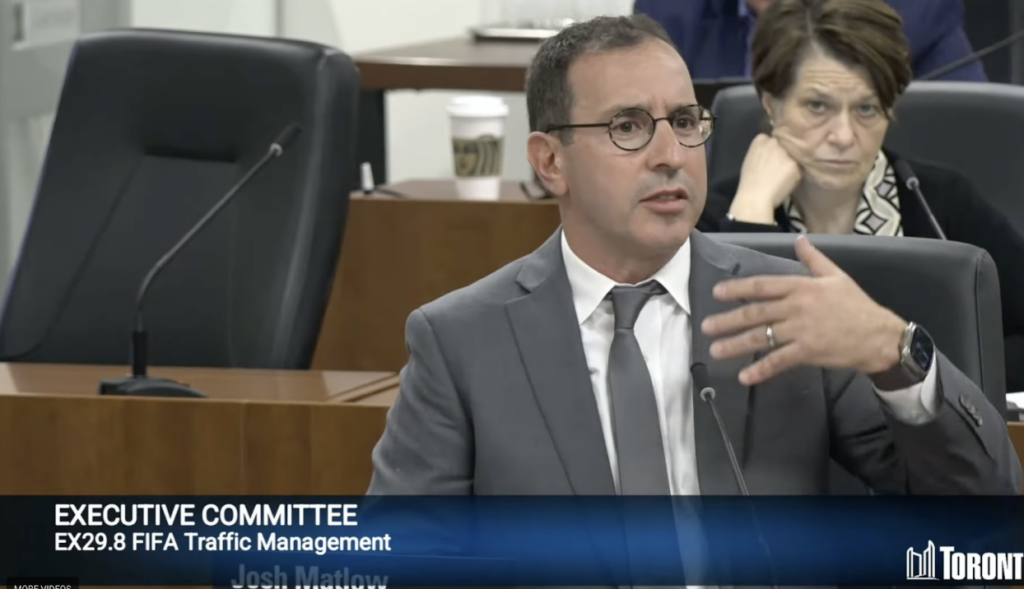
On Mar. 10, 2026 Toronto’s Executive Committee met at City Hall to discuss transportation planning related to the 2026 FIFA World Cup. As Toronto prepares to host matches, city staff and councillors are figuring out how transportation, traffic management and parking restrictions will operate during the tournament.
The conversation focused on how the City will move large numbers of visitors efficiently and safely around the downtown core, particularly near Exhibition Place where matches will take place. Committee members also raised concerns about communication with residents and businesses about traffic restrictions and planning timelines.
A taxi industry representative, Khamseh, also spoke to the committee about the potential role taxis could play in transporting visitors during the tournament. Khamseh said taxis could assist with moving visitors efficiently during the World Cup, emphasizing that taxis can operate through organized taxi stands, allowing passengers to approach vehicles directly rather than relying on app-based services.
“So taxi stands create order while random pickups create congestion,” said Khamseh.
Khamseh also highlighted safety features, such as cameras, within licensed taxis.
“These cameras provide an additional level of security for both passengers, drivers and can assist authorities if any incidents occur.”
Councillor Josh Matlow also questioned Mike Barnett, Director of Transportation Permits and Enforcement, and Paul Johnson, City Manager about street parking restrictions during the tournament.
“We will be limiting street parking and we will be looking at coming forward with a plan to the FIFA subcommittee on Mar. 30, that will provide details on exact restrictions for street parking,” said Barnett.
Staff indicated that restrictions will primarily focus on areas surrounding Exhibition Place and nearby neighbourhoods.
“It will be limited in specific areas around Liberty Village, Fort York. Again, in working with TTC to ensure we can provide the best movements and operations for transit,” said Mike Barnett.
Coun. Matlow also asked why a detailed traffic plan has not yet been released publicly, given that the tournament begins in June.
Mike Barnett responded that the timeline is tied to FIFA’s global planning process and coordination across host cities.
“Short answer is this is the time frame that all cities are working with FIFA on, so FIFA is looking at the plans, traffic plans across all the cities, and this is the time frame that that’s occurring in.”
Deputy Mayor Ausma Malik introduced a motion referring the item back to staff so it can be included in a more detailed transportation report expected later in March.
Malik emphasized the importance of preparing neighbourhoods expected to experience the largest impacts, like Fort York and Liberty Village.
Deputy Mayor Mike Colle also spoke about the amount of planning already underway across multiple city departments.
“We’ve had city staff working on issues related to FIFA for the last year and a half,” said Councillor Colle.
Colle pointed to the scale of coordination required to host a global event like the FIFA World Cup. He said they have “everybody involved,” and that, similar to when Taylor Swift came to Toronto and everything worked out, so will this.
Key takeaways
- Toronto is developing transportation and traffic management plans for the 2026 FIFA World Cup which will be shared when the city receives the game schedule.
- Street parking will be limited in certain areas of the downtown core, including Liberty Village and Fort York.
- City staff plan to present a more detailed transportation and traffic plan to the FIFA World Cup Subcommittee on Mar. 30.
- Taxi industry representatives encouraged the city to prioritize organized taxi stands as a transportation option during the tournament.
- Councillors raised concerns about the timeline for communicating traffic plans to residents and businesses.
- Deputy Mayor Malik introduced a motion referring the item back to staff so it can be included in the upcoming Mar. 30 report to the FIFA World Cup Subcommittee on transportation planning. The committee approved the motion.
On-the-ground observations from our documenter, Emma Amodio
During the meeting, much of the discussion centered on the complexity of planning transportation and traffic management for a major event like the FIFA World Cup.
What stood out to me was the tension between the urgency expressed by councillors who want clear plans communicated to the public and the explanation from staff that planning timelines depend on FIFA scheduling.
It was also notable that local industry representatives, such as those from the taxi sector, are already advocating for specific transportation strategies as the city continues to develop its plans. As someone who will be in Toronto during the games, it matters to me that they are addressing how the TTC will increase to meet the demands of locals and tourists alike.
UNANSWERED QUESTIONS
- What specific streets will have parking restrictions or road closures during the tournament?
- How will the City communicate traffic and transportation changes to residents and businesses before the World Cup begins?
- What role will taxis, rideshare services and public transit each play in transporting visitors during the tournament?
CHECK YOUR FACTS
Documenters:

Meeting notes done and documented by Emma Amodio